
Dinis Ferris Wheel · Observation Wheel Manufacturer
Ferris Wheel Projects & References
Wheels delivered to parks, waterfronts and resorts - pre-assembled and tested in our workshops before they ship.
A Ferris wheel project is a sequence of verified stages, not a single shipment. This page documents how Dinis runs a delivery from design freeze to commissioning, the records produced at each stage, and the scope an owner should expect in a complete reference. The same discipline applies to a compact 30 m wheel and a 120 m flagship.
1. Project scope and delivery model
The scope is fixed before fabrication, and the delivery model is the same whether we supply the wheel alone or as the anchor of a full park. The contract sets the standards and the acceptance criteria before any steel is cut.
The scope is fixed before fabrication: engineering, supply of the wheel, cabins, drive, control and lighting, pre-assembly test, supervised installation and commissioning, then training, spare parts and remote O&M support. The buyer scope covers foundations, utilities, access and local permits. This split keeps the ride system under one responsible party while local works stay with local teams.
The delivery model is the same whether we supply the wheel alone or as the anchor of a full park. What changes is the interface list: a full-park project adds the supporting rides and F&B to the same program. The contract sets the scope, the standards applied and the acceptance criteria before any steel is cut.
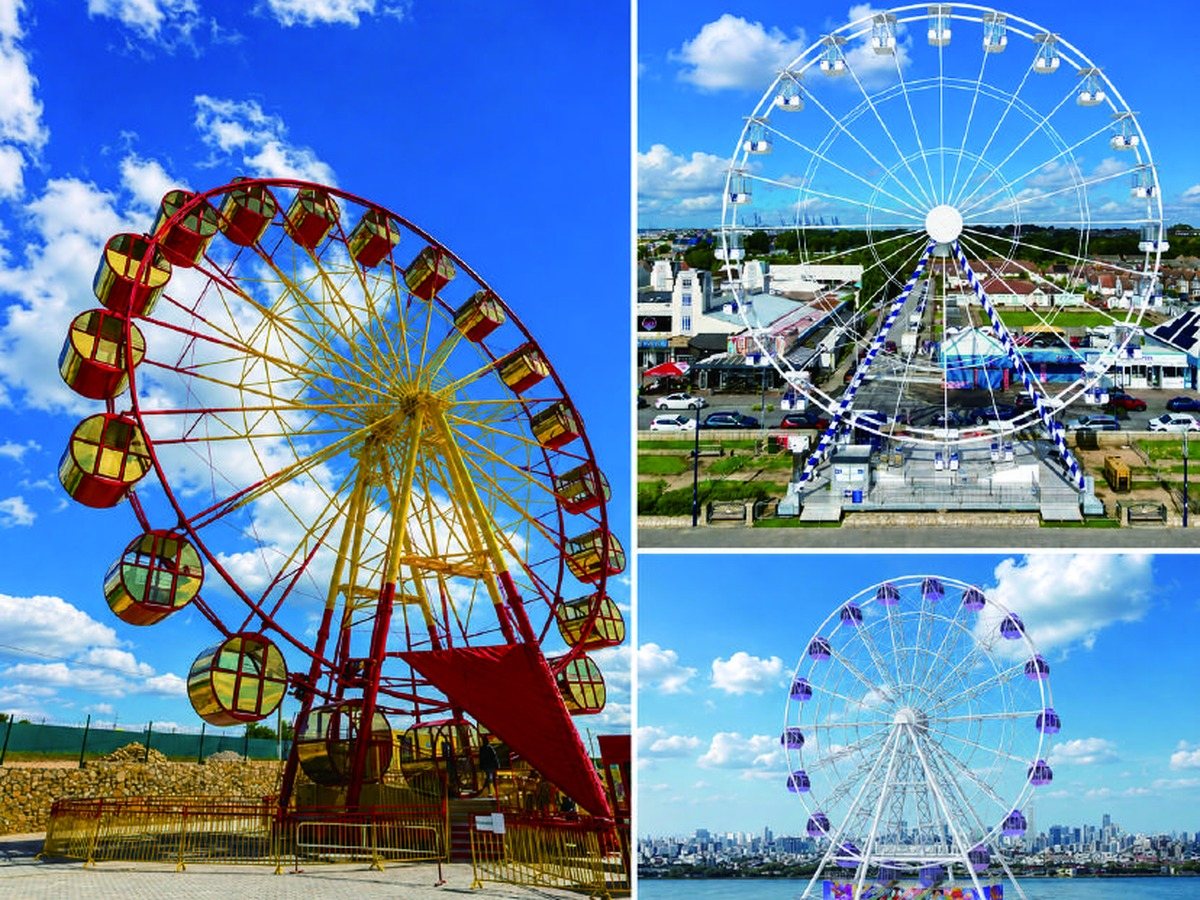
2. Engineering and design freeze
Design freeze locks the structure, cabin specification and lighting package with the buyer before fabrication. The design basis is recorded so the owner can trace the assumptions through the asset life.
Engineering starts from the site: the view corridor, wind and seismic loads, ground conditions and passenger flow. The structure, cabins, drive and lighting are designed as one integrated system, and the design is reviewed against EN 13814, ASTM F2291 or GB 8408 according to the destination market.
Design freeze locks the structure, cabin specification and lighting package with the buyer before fabrication. This is the point where changes are still inexpensive; after freeze, every change ripples through production and the schedule. The design basis is recorded so the owner can trace the assumptions through the asset life.
3. Workshop pre-assembly and testing
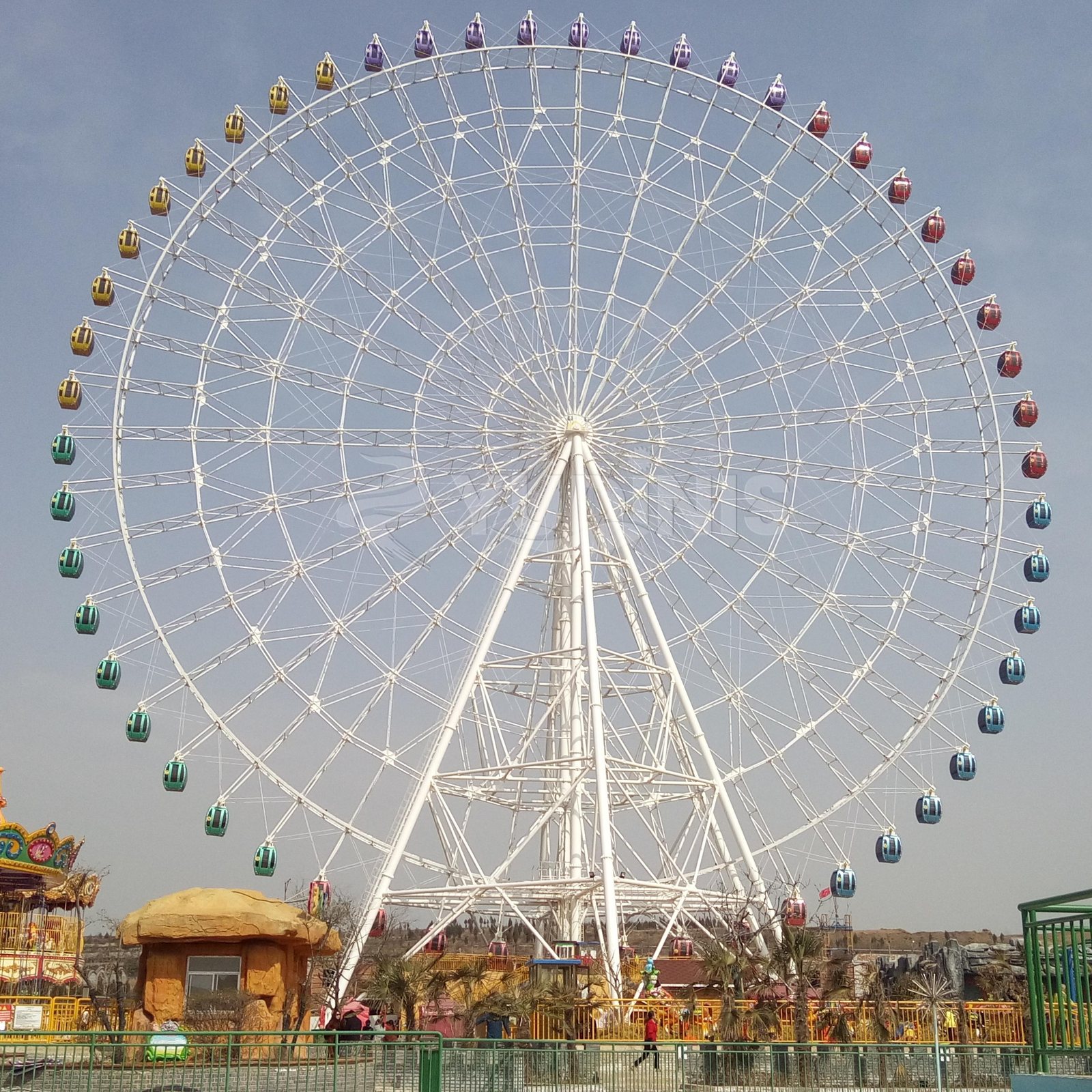
Pre-assembly catches fit and interface issues at the factory, where they are cheap to fix, rather than on a site with a crane standing by. The pre-assembly record is part of the handover file.
The wheel is erected in our workshop for fit, balance and a no-load test before shipment. This catches tolerance and interface issues at the factory, where they are cheap to fix, rather than on a site with a crane standing by. The pre-assembly record is part of the handover file.
Pre-assembly also trains the erection sequence: the segments are marked in the order they will be built on site, so the site crew repeats a proven sequence rather than solving it for the first time. For large wheels, major sub-assemblies are prepared to reduce the number of high lifts.
4. Foundation and civil coordination
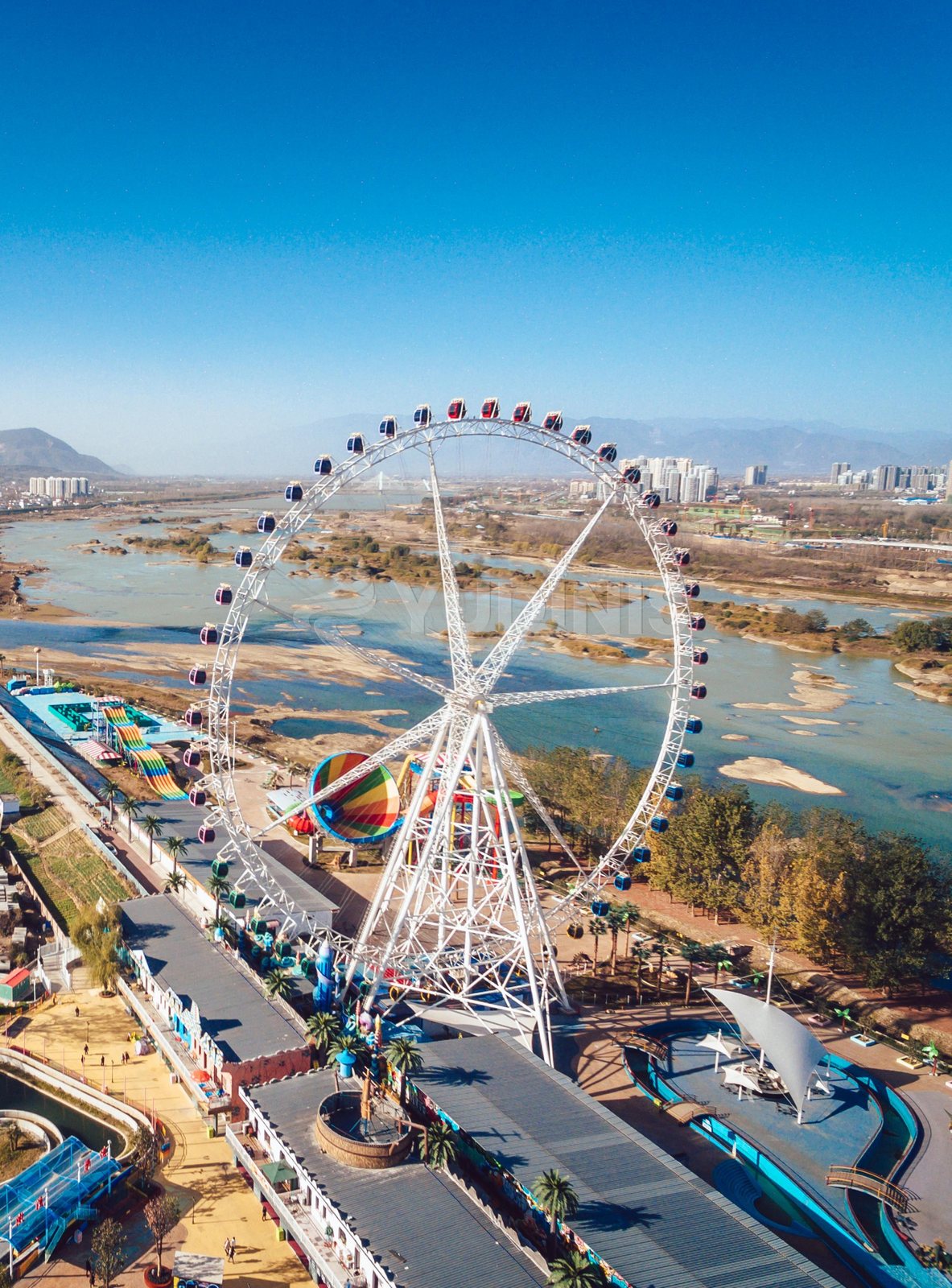
Civil coordination is where schedule risk concentrates, so the foundation concept and load cases are issued early and the foundation survey is handed over before erection begins.
The foundation concept and load cases are issued early so the civil contractor can start while the wheel is in production. The foundation drawings are developed against the geotechnical report, and the projection and foundation footprints are separate figures in the site plan.
Civil coordination is where schedule risk concentrates. Dinis provides the requirements and supervision, while the owner executes the works. A clear handover of the foundation survey and the utility connections before erection begins prevents the most common source of delay on wheel projects.
5. Manufacturing and quality control
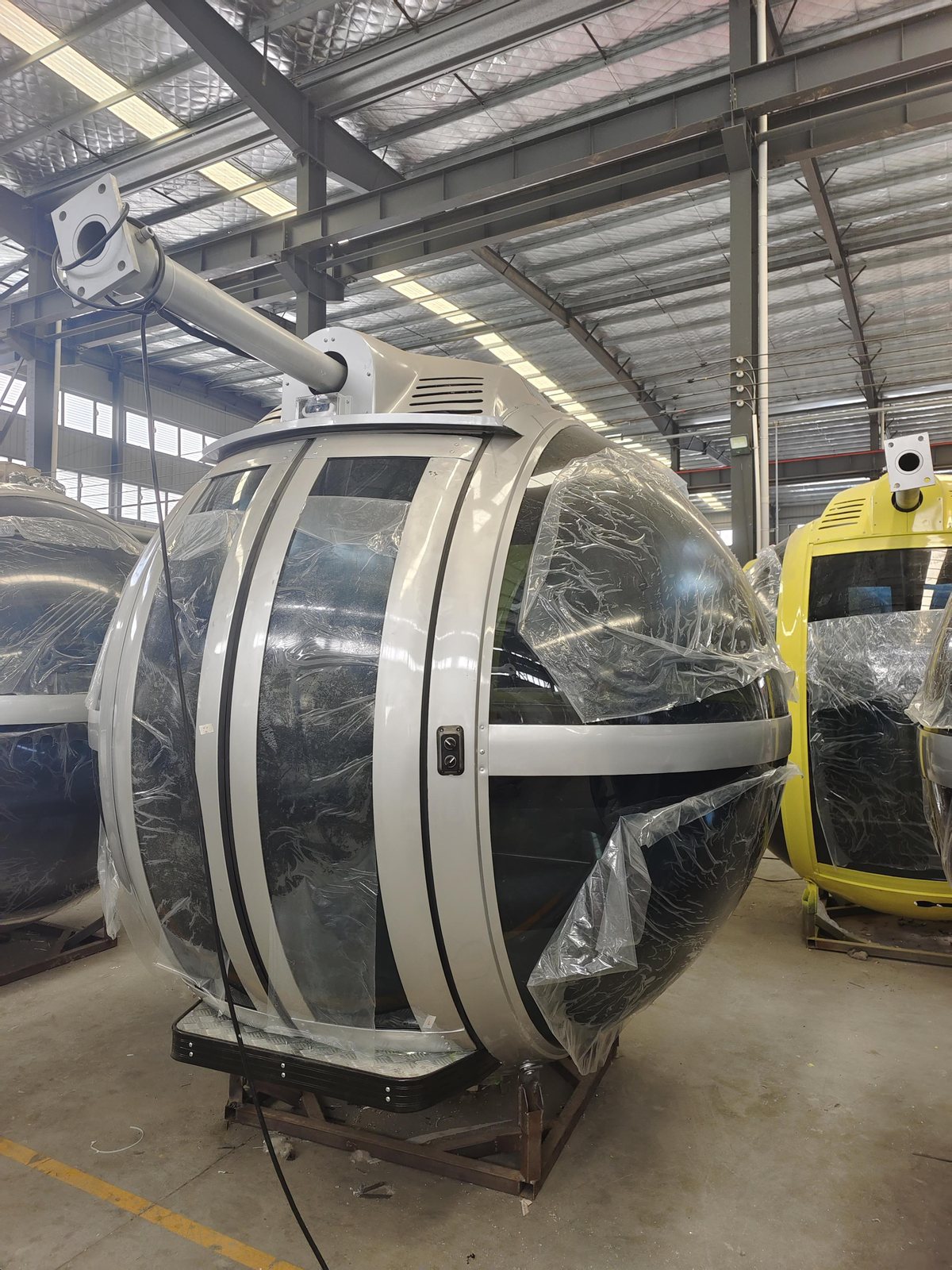
Quality control is documented rather than asserted: material certificates, weld records and test reports are compiled into the handover file as the work proceeds.
Steel is fabricated in our own workshops, with incoming material inspection, welding records and dimensional checks along the way. Cabins and drive systems are tested before assembly, and the control cabinet is wired and tested against the electrical specification.
Quality control is documented rather than asserted: material certificates, weld records and test reports are compiled into the handover file. A third-party inspection can be arranged before shipment and is often written into the contract for landmark projects.
6. Packing and shipping sequence
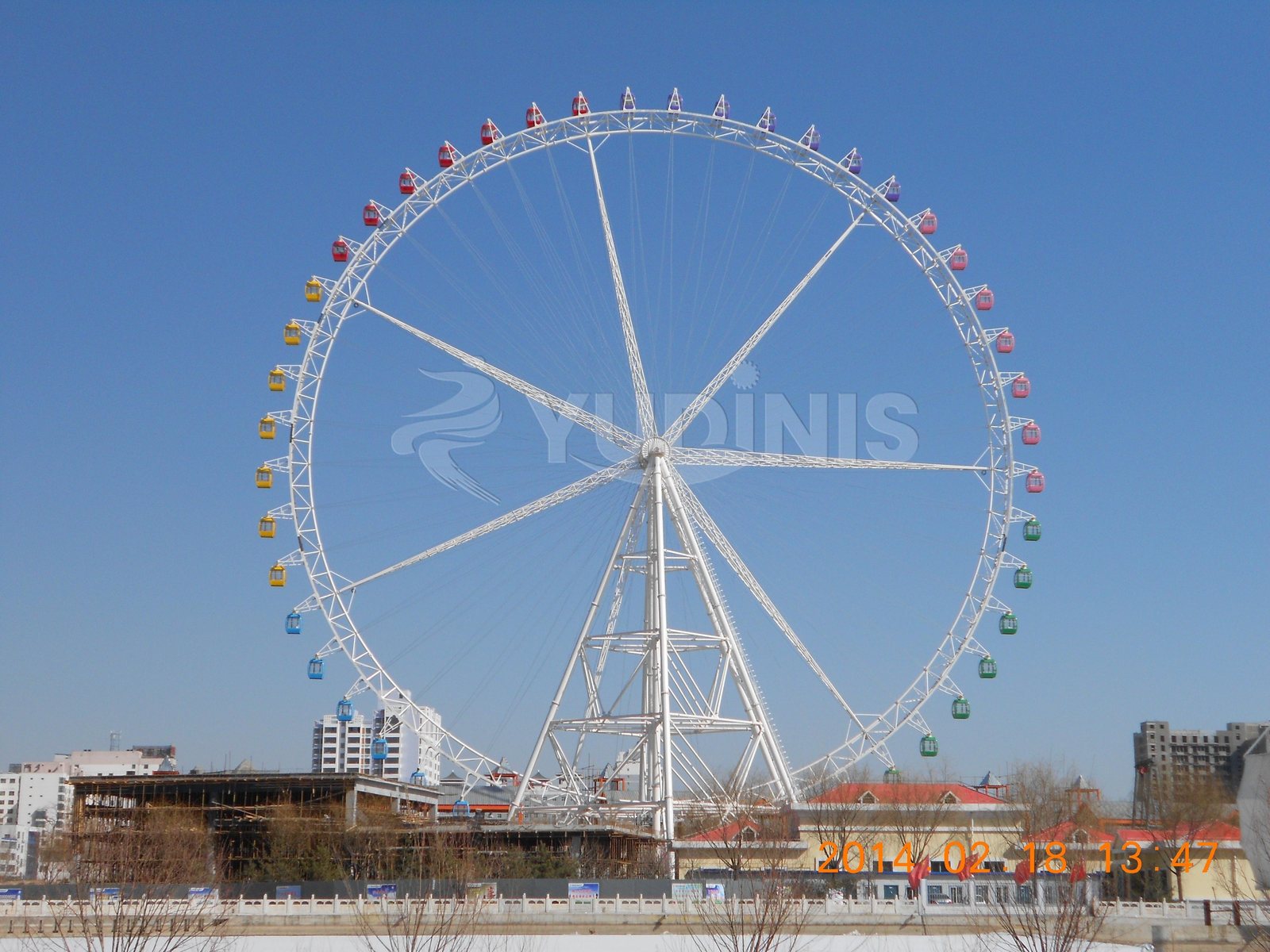
Segments are packed in the erection sequence so the site crew unpacks in the order they build. The packing list is tied to the pre-assembly marks and the crane plan.
Segments are packed in the erection sequence so the site crew unpacks in the order they build. The packing list is tied to the pre-assembly marks, and the containers are loaded with the site access and crane plan in mind. This turns shipping into part of the construction plan rather than a logistics afterthought.
For remote or island sites, the shipping plan includes the port, the road route and the final crane position. Documenting the route early avoids a segment that fits the ship but not the last bridge.

7. Site erection and supervision
Supervision protects both safety and geometry: a wheel erected a few millimeters out of true runs badly for its whole life. The alignment records become the baseline for later inspections.
Supervisors lead the assembly with the buyer's civil and electrical teams, following the pre-assembled sequence. The erection plan includes the crane lifts, the torque and alignment records and the work-at-height arrangements, so the site build is a controlled process rather than an improvisation.
Supervision protects both safety and geometry: a wheel that is erected a few millimeters out of true runs badly for its whole life. The alignment records are kept in the handover file and used as the baseline for later inspections.
8. Commissioning and acceptance
Commissioning covers no-load and full-load tests, safety interlocks, emergency stops and the lighting and cabin systems. Full-load testing simulates the passenger load to confirm the systems together.
Commissioning covers no-load and full-load tests, safety interlocks, emergency stops and the lighting and cabin systems. The wheel is tested through its operating envelope before guests board, and the acceptance criteria are agreed in the contract.
Full-load testing simulates the passenger load to confirm drive, brake and structure behavior together. The test records join the design basis and inspection documents in the handover file, giving the owner the evidence local authorities and insurers expect.
9. Training and handover
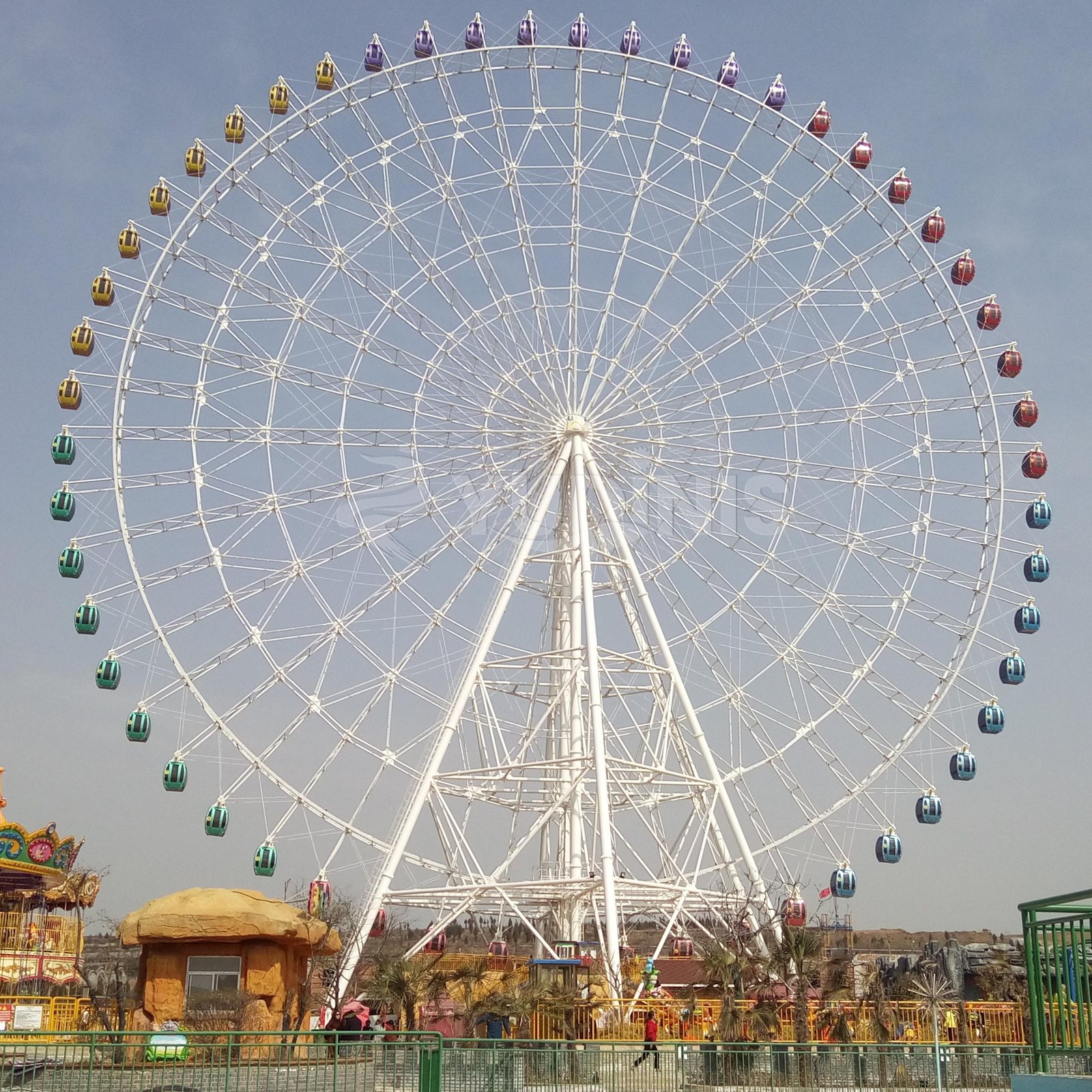
The handover package turns the engineering project into an operating asset. The owner leaves with the drawings, load cases, inspection schedule and a named support contact.
Operators are trained on site through theory, practice and escorted operation, typically over a 15-30 day cycle. Maintenance training covers the daily, weekly, monthly and annual checklists, and the spare parts list is handed over with the manuals and test reports.
The handover package turns the engineering project into an operating asset. The owner leaves with the drawings, load cases, inspection schedule and a named support contact, not just the keys to the control cabinet.
10. After-sales and references
After commissioning, remote monitoring watches speed, faults and service intervals, and the three-year spare parts kit keeps the wheel available. References are shared case by case.
After commissioning, the optional remote smart O&M platform monitors speed, faults and service intervals, and the three-year recommended spare parts kit keeps the wheel available through the season. The support desk remains available for the operating life of the asset.
References are shared case by case because many clients ask for confidentiality while projects are in development. Tell us the country, project type and height, and we will share the closest comparable reference with photos and the scope delivered.

Project references FAQ
Can I see a reference in my country?
Tell us the country, height and project type, and we will share the closest comparable reference that is not under confidentiality.
Many clients ask for confidentiality while their projects are in development, so references are shared case by case rather than published as a public list. The reference includes photos, the scope delivered and the timeline, so you can compare it against your own site and budget. For a landmark or public-private project we can also arrange a call with the engineering team to walk through the delivery records and the standards applied.
The point of a reference is not the marketing image but the reasoning: which constraint drove the model choice, how the civil and electrical interfaces were divided, and what the operator found during the first season. Those are the details that transfer to your site, and they are the parts a spec sheet cannot show.
When you ask for a reference, include as much as you can about the country, the project type and the height you are considering. That lets us match the closest comparable delivery rather than send a generic gallery.
The reference conversation is also where a buyer learns what a manufacturer will actually stand behind. Ask not only for photos but for the scope list, the standards applied and the handover documents, because those are the parts a brochure cannot show. A manufacturer that can walk you through a delivery record is demonstrating the same discipline it will apply to your project, while one that only offers images is leaving the engineering to be proven later. For a landmark or public-private project, a call with the engineering team is usually more useful than a gallery.
For a public-private or landmark project we can also arrange a technical call, because the financing and insurance partners usually want to hear the delivery discipline directly rather than through a brochure. The call covers the same ground as the written records, in a form the lenders and their technical advisers can challenge.
These records are the same evidence a future buyer will ask for.
What documentation do you provide at handover?
Manuals, test reports, the spare parts list and the maintenance schedule are delivered with operator training.
The full handover file includes the design basis, structural calculations, material and welding certificates, the pre-assembly record, site alignment records and the commissioning test results. This is the evidence local authorities, insurers and future buyers expect, and it is compiled through the project rather than assembled at the end.
Operators are trained on theory, practice and escorted operation, and the maintenance team receives the daily, weekly, monthly and annual checklists. The documentation is the difference between an asset you can operate and an asset you can defend, and it is part of the scope from the first design review.
The same file is what you will show a future investor or buyer when the wheel changes hands, because it proves the asset was engineered, tested and maintained rather than improvised.
The handover file is not an optional extra; it is the asset record the wheel will live on for twenty to twenty-five years. When the wheel is financed, insured or later sold, the buyer and the lender will ask for exactly the documents that were compiled during delivery. Producing them at the end is expensive and incomplete, while producing them as the work proceeds is routine. That is why the documentation is written into the scope from the first design review, and why the owner receives it as a working file rather than a box of loose paper.
A complete file also protects the operator at the first scheduled inspection, because the inspector can measure against the documented baseline instead of starting from an unknown condition. When the records are complete, the annual walkdown becomes a comparison against a known state rather than a fresh discovery each year.
The file is delivered as a working record, not a box of loose paper.