
Dinis Ferris Wheel · Observation Wheel Manufacturer
Theme Park 50 m Truss Ferris Wheel
A 128-passenger wheel as the anchor of a family park: sight lines, ride mix and the queue geometry planned together.
This representative case follows a regional family park that needed a signature attraction to anchor a new phase. The binding constraints were peak-hour capacity, the queue geometry and a park that had to keep operating while the wheel was erected.
1. Wheel placement and the guest loop
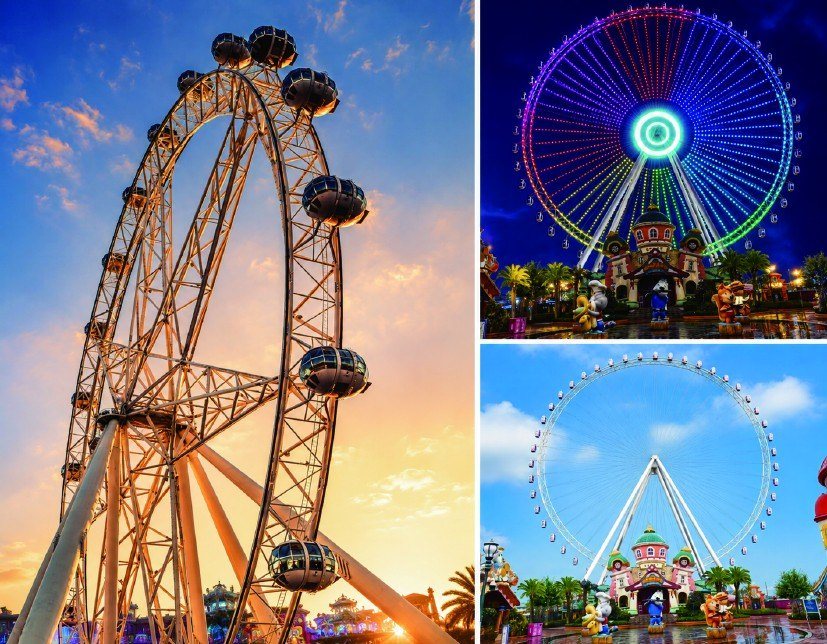
The 50 m truss wheel was placed at the center of the new zone so it closed the main sight line from the entrance and the promenade. The guest loop was drawn around it, with the family rides and F&B arranged so visitors pass them on the way to and from the wheel. This spread dwell time across the zone instead of concentrating it at one queue.
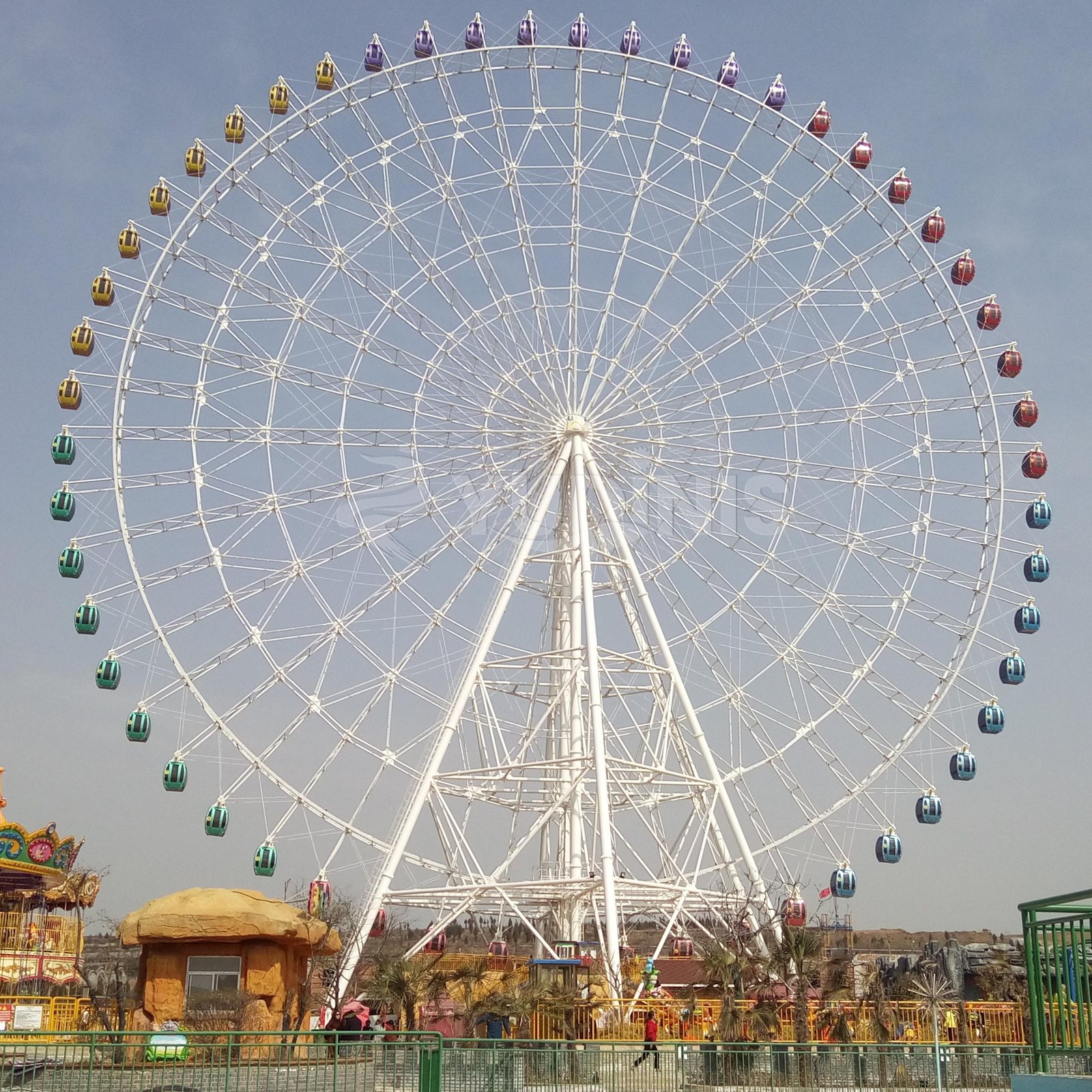
The 35 x 32 m projection set the plaza envelope, and the queue and boarding platform were sized for 32 four-seat cabins. The boarding geometry was designed for the peak-hour target so the wheel and its surroundings were planned as one capacity system.
2. Structure, capacity and the ride mix
The truss was chosen for stiffness: 32 cabins and a steady 0.204 m/s line speed need a rigid rim, and the truss delivers that without the concentrated foundation loads of an A-frame. The 128-passenger capacity fed the ride mix, which added family flats and a toddler area that complement rather than compete with the wheel.
The drive, cabin lighting and LED scheme were designed as one electrical system, so the park did not coordinate separate vendors. The cabin and lighting package was fixed before the electrical design, which kept the utility sizing stable.
3. Phased delivery while the park operated
The wheel was delivered in phases so the existing park kept running: foundations and utilities first, then erection in the marked sequence, then commissioning and opening support. The pre-assembled segments shipped in erection order, which shortened the site program and reduced the crane lifts near the operating park.
Commissioning covered no-load and full-load tests, interlocks and lighting before the zone opened. Training and the spare parts kit handed the wheel to the park team, and remote monitoring now watches speed and faults between visits.
Theme park case FAQ
Why a truss instead of an A-frame for a park?
The park needed 32 cabins and steady line speed, which the truss stiffness serves well, and the site was wide enough for the 35 x 32 m projection. An A-frame would save width but reduce capacity and concentrate the foundation loads.
Key takeaway: a park wheel is planned as a capacity system. The truss stiffness, the 32-cabin count and the queue geometry were decided together, not in sequence.